
How Long Do Solar Batteries Last? Lifespan Guide (2026)
How Long Do Solar Batteries Last?
If you are comparing home battery storage systems, the first question is usually price. The second, smarter question is lifespan: how long do solar batteries last, and what is the real cost per year of owning one? The short answer is that a modern LiFePO4 battery lasts between 10 and 15 years in normal household use, and many reach 16 years or more before they drop below 80% of their original capacity. This guide explains exactly what determines that number, and how you can make sure your solar storage battery lives to the top end of that range.
What Determines How Long a Solar Battery Lasts?
A solar battery ages in two ways. Calendar ageing happens slowly over time, driven by temperature and how long the cells sit at high voltage. Cycle ageing happens every time the battery charges and discharges. Both matter, but for a home solar system that cycles once or twice a day, cycle life is usually the limiting factor.
Three variables control cycle ageing more than anything else:
- Depth of discharge (DoD) — a battery that discharges to 20% instead of 10% wears much more slowly.
- Charge rate and discharge rate — gentle currents stress cells less than hard, fast charges.
- Operating temperature — heat is the silent killer. A battery in a hot garage will fade years before one in a ventilated indoor space.
Manufacturers quote cycle life at a specific DoD, most commonly 80% or 90%. When you see "6,000 cycles at 80% DoD," that means 6,000 full-ish cycles before capacity drops to roughly 80% of new. For a typical home cycling once per day, 6,000 cycles is about 16 years.
LiFePO4 vs Other Battery Chemistries for Solar Storage
Lithium iron phosphate (LiFePO4) is now the default chemistry for solar storage, and for good reason. Compared with older NMC lithium-ion cells and flooded lead-acid banks, LiFePO4 offers:
- Longer cycle life — typically 4,000–8,000 cycles versus 500–1,500 for lead-acid.
- Better thermal stability — far lower fire risk, which is why LiFePO4 dominates residential storage.
- Flat discharge curve — usable capacity stays consistent until the battery is nearly empty.
- No maintenance — no topping up with water, no equalisation charges.
If you are wondering "is LiFePO4 better than lead acid?", the numbers are not close: a lead-acid bank may need replacing after five to seven years, while a quality 48V LiFePO4 battery routinely runs for more than a decade.
How Many Years Does a 48V Battery Last?
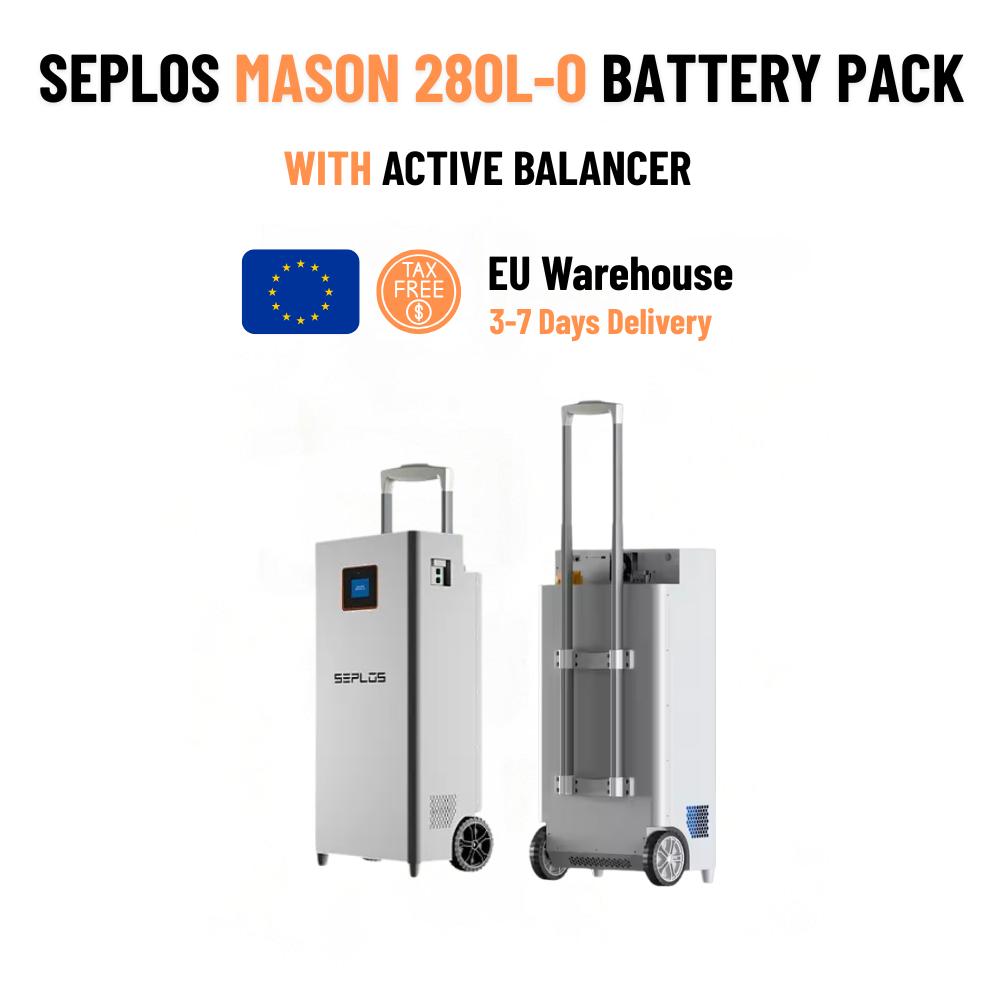
A 48V or 51.2V home battery is built from 16 prismatic LiFePO4 cells in series, and its calendar life is governed by the same chemistry. In real installations across Europe, a 48V 280Ah battery (about 14.3kWh of usable energy) typically delivers 10–15 years of service. The EU stock battery packs we sell are quoted at 6,000+ cycles at 80% depth of discharge — that is roughly 16 years at one cycle per day, or 22 years at the 0.8 cycles per day the average EU household actually uses.
The important nuance is the difference between cycle life and calendar life. Even a battery that never cycles loses capacity over time through storage ageing. So the practical answer to "how long do solar batteries last" is: plan for 10–15 years, and let a strong cycle-life rating protect you if you run the battery hard every day.
Cycle Life: How Many Charge Cycles Can You Expect?
A cycle is one full discharge plus recharge, measured in energy throughput, not in calendar days. Two half-cycles count as one full cycle. On that basis:
| Chemistry | Typical cycle life (80% DoD) | Typical service life |
|---|---|---|
| Flooded lead-acid | 500–1,500 | 5–7 years |
| NMC lithium-ion | 2,000–4,000 | 8–12 years |
| LiFePO4 | 4,000–8,000 | 10–15+ years |
If a LiFePO4 battery is rated at 6,000 cycles and your household completes one cycle a day, that is 6,000 days — over 16 years of daily use before reaching 80% capacity.
How to Make Your Home Battery Storage Last Longer
You can meaningfully extend a battery's lifespan without changing the hardware:
1. Keep it cool and dry. Install in a ventilated indoor space, out of direct sun. High heat is the biggest accelerator of calendar ageing.
2. Avoid deep discharges. Most BMS units let you set a reserve. A 90% DoD limit instead of 100% adds years.
3. Don't leave it at 100% for weeks. If you have an off-grid cabin or seasonal home, store the battery around 50–60% charge.
4. Match the inverter properly. Oversized charge currents stress cells. A correctly matched 48V system charges gently and lives longer.
5. Use the monitoring app. Modern BMS dashboards show cycle count and cell balance; catching a weak cell early prevents cascade damage.
When Should You Replace a Solar Battery?
Replace a solar battery when its usable capacity drops below roughly 80% of rated, when it no longer covers your overnight load, or when the BMS reports persistent cell imbalance that rebalancing cannot fix. For a 48V 280Ah pack, that "20% gone" point usually arrives after 10–15 years — around the same time most households start planning a second solar array or an upgrade to a larger 32kWh system.
Frequently Asked Questions
How long does a 15kWh battery last?
A 15kWh LiFePO4 battery (such as a 51.2V 280Ah pack) lasts 10–15 years in normal use, with 6,000+ cycles at 80% DoD. In practice, a 15kWh battery covers a typical EU household's overnight consumption, so it cycles about once a day.
Do solar batteries last as long as solar panels?
Solar panels carry 25–30 year warranties, so most homeowners will replace their solar storage battery at least once during the panels' lifetime. Choose LiFePO4 rather than lead-acid to minimise the number of replacements.
Building your own pack? See our step-by-step guide to building a DIY LiFePO4 battery, or check the battery sizing guide to match capacity to your home.
(end of article)
Ready to store your own solar power for the next decade?
Browse our EU stock battery packs — LiFePO4 48V systems with 6,000+ cycle life, delivered from our European warehouse in 4–7 days with no customs duties.
